
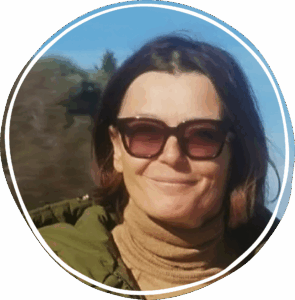
Silvana Mihaljević
Chartered Civil Engineer
Chartered Civil Engineer
Expertise and Work Approach
Since 1997, I have been involved in the design and supervision of technical solutions for conventional water supply and drainage systems in urban environments, contributing to urban planning as well as architectural and construction projects.
Since 2011, my focus has shifted toward developing sustainable water management solutions—integrating conventional, green, and blue infrastructure, with an emphasis on sustainable stormwater drainage, environmental protection, and urban resilience. In parallel, I have continued working on building service installations.
I approach water supply and drainage as living, dynamic systems that constantly interact with their surroundings, aiming to create technically efficient, environmentally responsible, and long-term sustainable solutions.
Fields of Work and Application
CONVENTIONAL INFRASTRUCTURE
- Water supply and irrigation
- Drainage systems, pumping stations, and biological wastewater treatment plants
- Design of building installations
- Planning of pedestrian and bicycle paths, and public spaces with integrated urban infrastructure
BLUE AND GREEN INFRASTRUCTURE
- Rain gardens, parks, natural swimming pools, retention–filtration, infiltration, and drainage systems
- Rainwater harvesting systems with underground storage tanks
- Implementation of permeable surface
- Use of locally excavated materials combined with the planting of native plant species
- Spatial design based on biomorphological forms, aligned with the environment and its regeneration
Vision
Droughts and floods are not merely natural extremes—they are messages, signs of imbalance. When we approach nature with respect rather than through a lens of exploitation, we create space for understanding, collaboration, and healing.
The Earth is not an empty expanse for occupation, nor a domain for clearing and control—it is the foundation of all existence, shaped over centuries by the coexistence of people, soil, the mineral world, flora, fauna, water, and wind. It remembers—both the traces of our presence and the consequences of our neglect.
Therefore, landscape regeneration does not begin with the work of machines, but with listening to the needs of a space and understanding its past, which has shaped its present. As in human communication, true listening with respect is the key to understanding, connection, and taking the most appropriate steps.
Only when we include observation, respect, and deep listening in the process can we create solutions that are sustainable and profoundly humane. A combination of traditional and contemporary knowledge helps enable regeneration, conservation, sustainability, and development—adapted to the ongoing challenges of climate change.
Greenery in cities then becomes more than aesthetics—it becomes a space of healing, belonging, and identity, with a vital contribution to quality of life. Excavated material is no longer waste but a building element which, when loosened or shaped into new forms, remains useful and gains new value.
By embracing and integrating green hydrotechnical solutions and green-blue infrastructure—such as rain gardens and parks—challenges like flooding can be transformed into beneficial, living, and beautiful spaces for everyone. This approach invites collaboration on all levels of existence. Water, then, is no longer a threat but a giver and teacher of life. Planning in this spirit is not an act of controlling nature, but a dialogue and coexistence with it.
Mission
My mission is to contribute to the creation of cities that live in harmony with nature. Through sustainable water management approaches, I connect technical knowledge with natural processes to support biodiversity preservation, reduce flood risks, protect small hydrological and ecological cycles, and create spaces capable of adapting to contemporary climate challenges.
I do not view a plot of land as an isolated point, but as part of a broader whole—an ecosystem, a community, and a landscape—striving to link functionality with sensitivity to natural processes and rhythms.
At the heart of my work lies respect—for nature, for space, for its past, present, and future.
I believe in a co-creative process, where we shape spaces not in isolation but in dialogue with their existing context—whether it is a plot, a neighborhood, or an entire city.
This approach enables the creation of spaces that are not only efficient but also aesthetically harmonious and beneficial on many levels—for people, plants, animals, soil, and water.